


If you’re running fixed-price jobs in Ireland right now, something quiet is happening to your margin.
Concrete, piping and insulation are up as much as 10% in the last two months. Not over the last year — the last two months. A new home that was costed in February is €15,000 to €20,000 more expensive to build today. And if you signed a contract before Easter, that gap comes straight out of your pocket.
This isn’t speculation. These were the figures shared this week at an industry summit in Croke Park attended by the country’s largest builders, housing bodies and economists. The sentiment in the room ranged from cautious optimism to outright alarm. What nobody disagreed on: costs are moving fast, and the lag between a quote and an invoice is now dangerous.
Builders have always dealt with materials inflation. This time the timing is sharper than anyone planned for.
The cost jump is being driven partly by the conflict in Iran, which has disrupted supply chains and pushed energy-linked materials — insulation, piping, polymer-based products — up hard and fast. Ivan Gaine of Sherry Fitzgerald put it plainly at the summit: “What worked in February may not work in May or June.”
Stretch that across a four- or five-month residential build and the picture gets uncomfortable. A job priced at healthy margin in Q1 can quietly become a loss by the time you’re chasing the final payment.
Meanwhile, apartment starts are falling — completions were down 39% in 2024 per Eurostat — so the pipeline of new work isn’t there to absorb the hit. The jobs you have on now are the ones that matter.
You can’t control what materials cost. You can control how fast your job reacts when prices move. Five practical things worth looking at today:
None of this is new. All of it is harder to do consistently when you’re running three or four jobs at once from a phone on a rainy site.
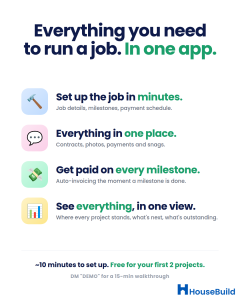
That’s the problem Housebuild was built to solve. Jobs, milestones, snaglists, documents, client messaging and invoicing — all in one place, on your phone or on the laptop. No chasing paperwork. No chasing payments. Nothing slipping between the cracks when a materials price jumps and you need to react fast.
If you’ve got live jobs priced at February rates, this week is the right time to get on top of them.